

Photo by Josh Olale on Unsplash
What would it take for the governors that were elected on Nov. 3, whatever their party, to be remembered more for the real-life outcomes they deliver than for the promises they make, or even the laws they pass?
The dialogue around the Abundance movement as set out in Ezra Klein and Derek Thompson’s 2025 book has provided one important answer to this question: if we want government to deliver, we must sometimes remove the regulations and veto points that prevent it from doing so. Whether it’s in permitting, personnel rules, or administrative procedures, the brokenness of this “plumbing of government” is a key reason why America struggles to deliver everything from homes and clean energy to transit and new medicines.
I agree with that, but removing those constraints is only part of the solution. The next frontier of Abundance – and one that everyone just elected will need to confront – is to fix government's ability to get things done.
To do that most people reach for more policy. What they underestimate is the importance of practice: the management routines, systems, and day-to-day things that people in government do to focus (or not) on delivering results.
The Abundance Election
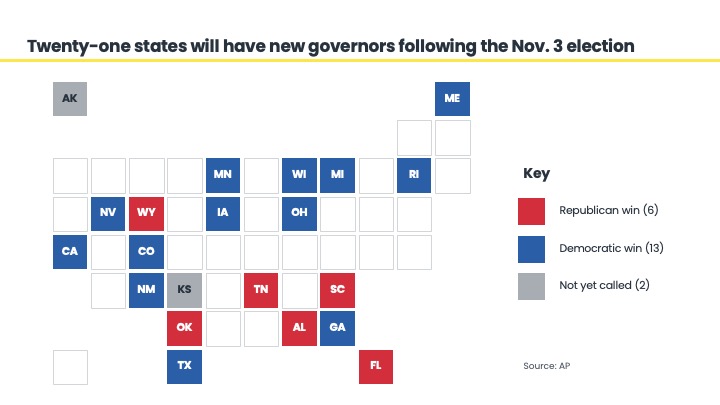
As a result of the Nov. 3 elections, America will have 21 new state governors in the new year. Each of them has done the second hardest thing in politics by getting elected. Now they will all have to turn their attention to the hardest thing: delivering on the promises they’ve made. Most governors-elect, on the left and the right, promised some form of Abundance: more housing, good jobs, lower costs, or less red tape. And those with friendly legislatures will pass important signature laws in their first 100 days.
Any governor wants to pass policy and get results, but if I'm a new governor, the people around me are almost certainly going to prioritize policy first. There are good reasons for this. First legislative sessions create urgency and momentum for my agenda – and the window often doesn’t open more than once. I can see the legislative mechanics and the wrangling I'll have to do to get a bill passed. It's a known problem with a known set of solutions. And of course, new legislation makes good early headlines.
Implementing those new laws through a massive bureaucracy, and delivering real results through it, are very different challenges. Most laws aren’t written with implementation in mind. The agencies responsible, the delivery chain through which things actually happen, the metrics and feedback loops to track during implementation: most of that has to be figured out, and if that capacity isn't there, things fall apart.
As a result, if I’m a new governor, my comfort zone will be to promise law and policy changes but shy away from promising specific outcomes, because it’s hard to be confident in the capacity of the government I just started leading to deliver on my agenda. But this lack of confidence is also a self-fulfilling prophecy. That's how, unless we do something different, the most likely outcome in 2027 is an abundance of policy without a lot of results.
The delivery gap: the unglamorous details that get things done
There is a plethora of think tanks and institutes specializing in all kinds of public policy, and the work they do is essential to identifying the best reforms to pursue. One reason we founded Delivery Associates was the systematic undersupply of people who think about the messy, nitty gritty, unglamorous details of how policy translates into changed experiences for the people government serves.
I've spent most of my career helping governments, including state governments, to turn ambition into results, and the constraint is almost always the ability to get things done. In practice, that means dedicated capacity inside government with the sole purpose of making things happen.
When we first meet with officials trying to fix something, we talk a lot about our conditions for success. The first is simply that whoever is in charge recognizes the importance of the problem and is willing to set goals and publicly hold themselves to them. The second is that they task someone close to them with tracking progress and reporting back.
This person or team should be guided by five questions: What are we trying to do? How are we planning to do it? At any given moment, how will we know we are on track? If we are not on track, what will we do about it? How do we ensure lasting impact?
How Maryland did it
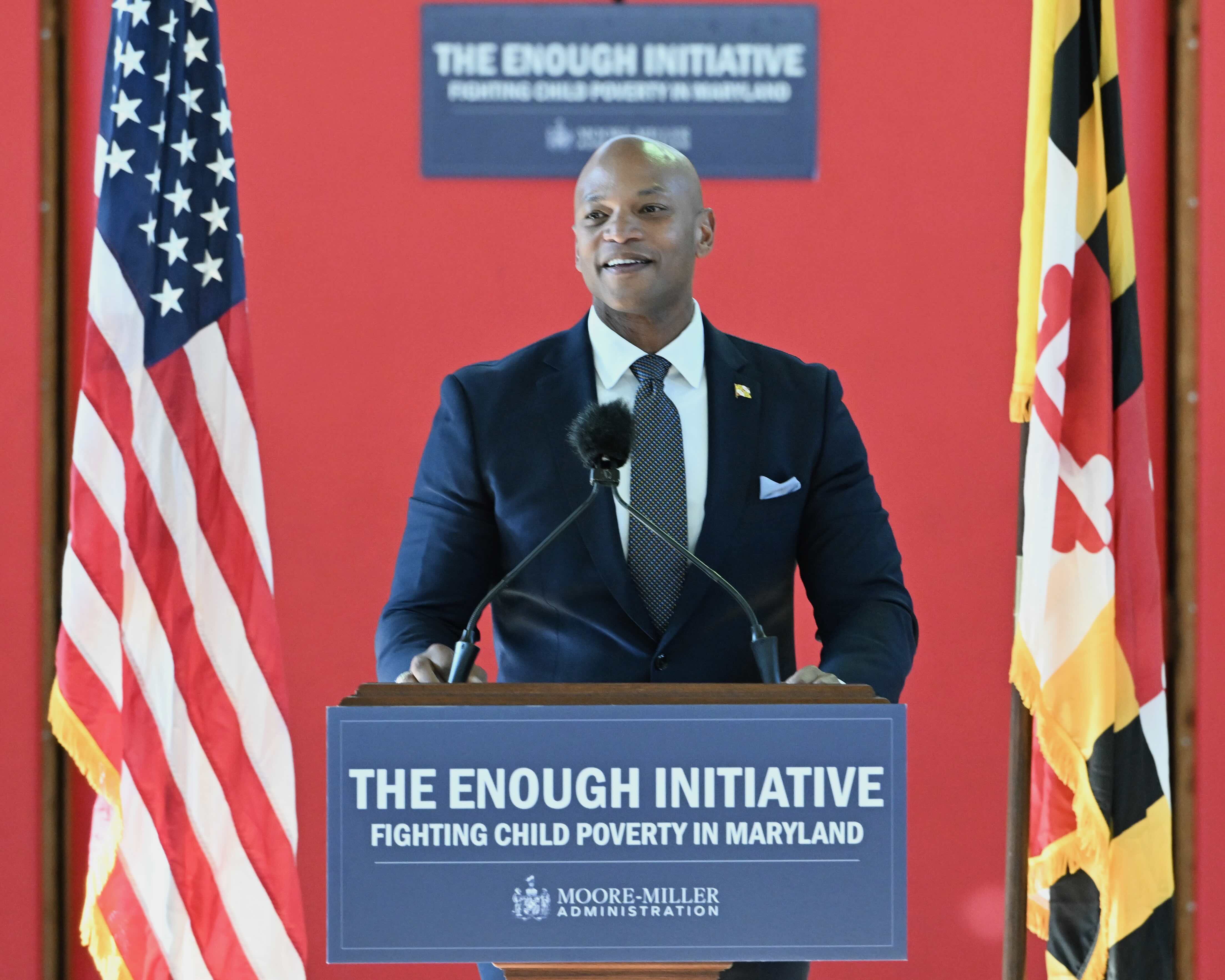
Maryland shows how this can work. Gov. Wes Moore, whose team we’ve been privileged to partner with, set a goal two weeks after taking office in early 2023 of ending child poverty in the state. Acknowledging that the goal was “audacious”, he created a ‘Governor’s Office for Children’ to pursue it by coordinating the efforts of more than a dozen state agencies.
The office had broad support from the administration but little delivery infrastructure. We worked alongside the team to build it from the ground up, hiring and onboarding staff and helping to organize its multi-agency coalition. We also helped to expand access to public benefits and manage a grant program called ENOUGH, for neighborhoods hit hardest by poverty.
Reducing, let alone ending child poverty is a long-term goal that could take years to show up in census statistics. But early indicators show that the structures are working. ENOUGH grants have grown from $13.1 million in 2024 to $32 million so far in 2026, allowing these communities to launch new programs designed to help increase school attendance, math and reading scores, food security and employment. Also, in 2025 about 13,500 more people than the previous year claimed the Maryland Earned Income Tax Credit (EITC) aimed at easing the tax burden on poorer households.
Laws are a first step – but not the last
I get why people default to policy over practice to get government working. Early in my career I thought I'd one day make laws and policies that would change the world.
I soon realized I could do more by helping to implement the policies we already have. Getting policy right is critical but it’s 10% of the problem. Ask the authors of H.R. 1, the One Big Beautiful Bill, about the landmark program it created to extend Pell grants to short job-training courses. They’ll tell you that its impact on access to good jobs (its actual intended purpose) will depend entirely on how states implement its provisions in the coming years: what constitutes an eligible program? How will people know that this pathway is available to them? How will we track results and spending?
Take any signature piece of legislation at the state and federal level, and the story is the same. Answering questions like these is 90% of the work that will make the difference between a reform’s success and failure. It might not sound glamorous but it has to happen for policy to make a difference.
So what would it look like if this class of incoming governors, elected in the year of our nation’s 250th birthday, promised more ambitious outcomes than their predecessors, because they were confident they had a fighting chance of delivering them? What if they went down in history as the class that actually delivered on those promises because they paid equal attention to policy and practice? It seems radical and rare in today’s age of cynicism and low trust in government, but it is the standard Abundance sets for itself. It isn’t easy, and results take time. But it can be done.
A transition turns campaign promises into a working government, and it succeeds or fails on operations. Lessons from Maryland and North Carolina.